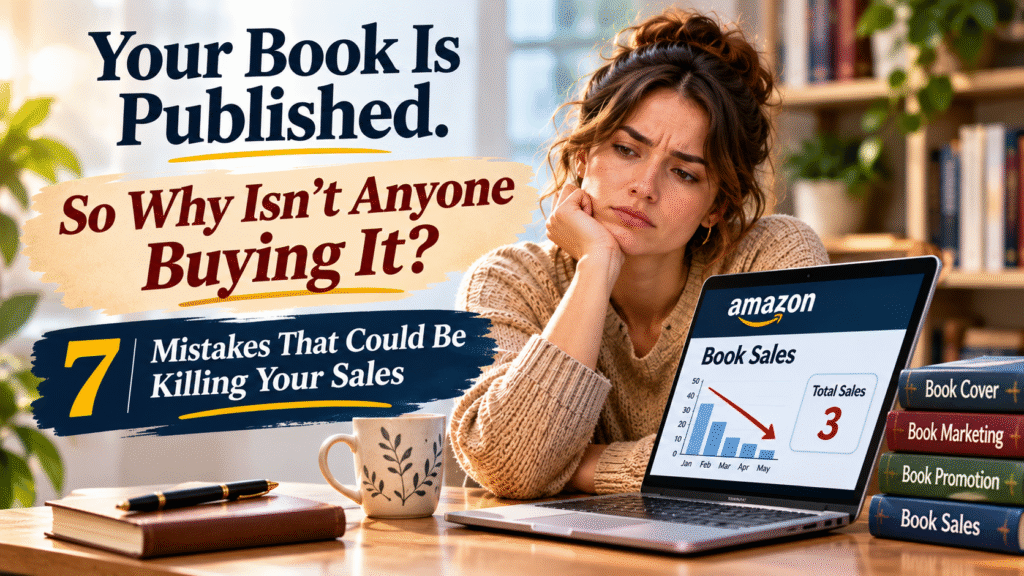
You wrote the book. You edited it, designed the cover, uploaded it to Amazon, and finally hit Publish. But now you may be wondering: Why is my book not selling?
Then came the silence.
No flood of orders. No growing readership. Maybe a few purchases from friends and family, followed by disappointing sales.
Now you’re asking yourself: Why is my book not selling?
Here’s what many first-time authors don’t realize: publishing a book and successfully selling one are two entirely different challenges. Even a well-written book can struggle when readers can’t find it, its presentation doesn’t capture attention, or its marketing reaches the wrong audience.
The good news? Poor sales don’t automatically mean you’ve written a bad book.
From ineffective Amazon listings to overlooked book promotion strategies, several common mistakes could be preventing your book from reaching its potential readers.
Let’s uncover seven of them and how to fix them.
1. Why Is My Book Not Selling? Readers Can’t Find It
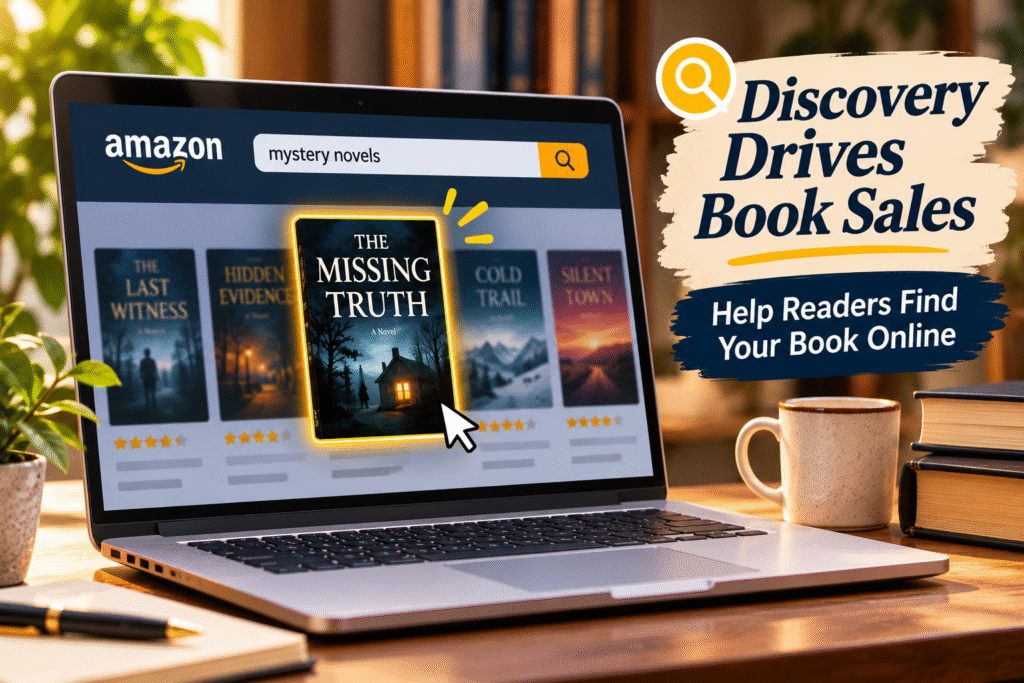
Your book might be available on Amazon, Barnes & Noble, or other retailers. But availability doesn’t guarantee visibility.
Thousands of books compete for attention across online bookstores. Unless readers already know your name or title, how will they discover yours?
This is one of the biggest challenges affecting self-published book sales: being published doesn’t automatically mean being discoverable.
Readers often search for specific genres, themes, or subjects, such as psychological thrillers with unexpected endings or Christian books about overcoming grief. If your book isn’t positioned for relevant searches, potential readers may never encounter it.
How to Fix It
Start by reviewing your book’s online presence:
- Use relevant Amazon keywords that accurately describe your book.
- Select appropriate categories and subgenres.
- Write a compelling title, subtitle, and description.
- Maintain consistent author information across platforms.
- Build visibility through social media, author websites, and relevant outreach.
Effective book marketing strategies begin with discoverability.
Remember: Your book can’t attract readers who don’t know it exists.
2. Your Book Cover Isn’t Attracting the Right Readers
Imagine browsing an online bookstore and discovering two mystery novels.
One features compelling typography, professional imagery, and a design that immediately communicates suspense. The other uses mismatched fonts, confusing colors, and imagery that doesn’t reflect its genre.
Which would catch your attention?
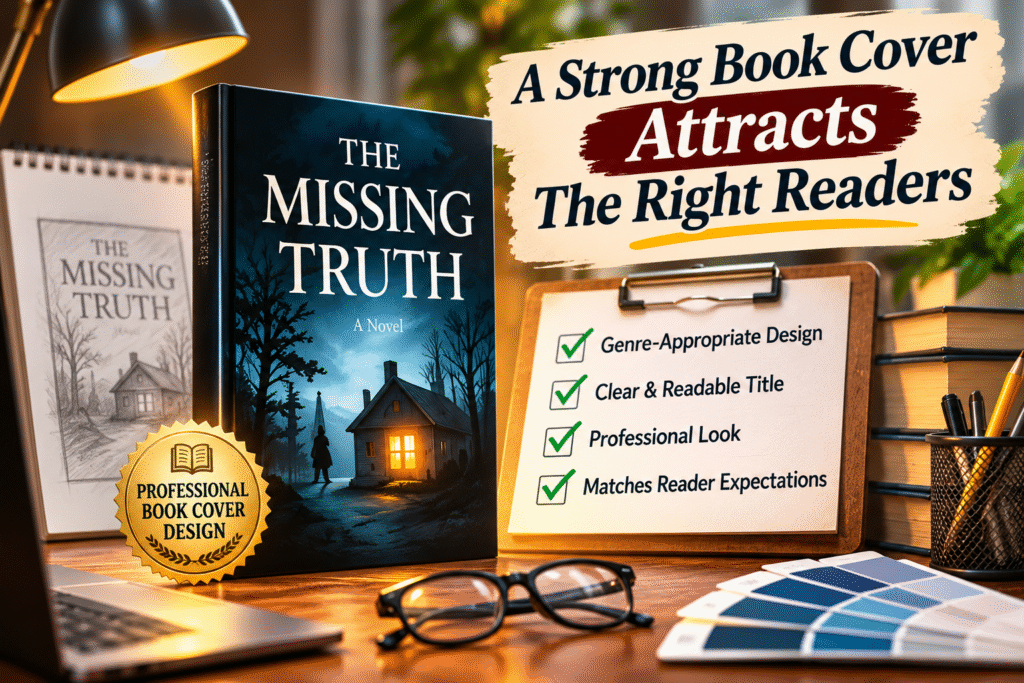
Your cover is often the first impression readers have of your book. Before exploring the description or reading a sample, they see a thumbnail.
But an effective cover does more than look attractive. It communicates genre, tone, and reader expectations.
A romance cover should appeal to romance readers. A business book should establish credibility. A children’s book should connect with its intended audience.
If your design sends the wrong message, readers might scroll past without investigating further.
How to Fix It
Evaluate your cover from a reader’s perspective:
- Is the title readable at thumbnail size?
- Does the design reflect your book’s genre?
- Are the typography and imagery professional?
- Does it compare favorably with similar books?
- Would someone recognize the book’s tone without reading its description?
Research successful covers in your category to understand established visual expectations.
If your current design isn’t communicating effectively, investing in professional book cover design may be worthwhile.
A great cover doesn’t guarantee sales, but an ineffective one can prevent readers from clicking.
3. Your Amazon Book Description Isn’t Convincing Readers
Getting someone to click on your book is progress. Convincing them to purchase it is another challenge.
Your Amazon book description plays an important role in turning curiosity into interest.
Unfortunately, many authors treat their descriptions as summaries rather than persuasive introductions.
They reveal too much of the plot, introduce unnecessary characters, or write lengthy paragraphs without establishing what makes the book worth reading.
The result? Readers lose interest before discovering its strongest qualities.
How to Fix It
Think of your description as a sales pitch that respects the reader’s intelligence.
For fiction, introduce the central conflict, establish the stakes, and create curiosity without revealing major twists.
For nonfiction, identify the reader’s problem, explain why it matters, and communicate what they’ll gain from reading.
An effective description should:
- Begin with a compelling hook.
- Establish the book’s premise quickly.
- Highlight its most interesting elements.
- Use short, readable paragraphs.
- Avoid unnecessary spoilers or exaggerated promises.
- Give readers a reason to explore further.
For example:
“A detective investigates several mysterious disappearances.”
Now compare that with:
“Every missing person left behind the same photograph. The detective investigating them is in it, too.”
Both introduce a mystery, but the second creates immediate curiosity.
If your Amazon book sales are disappointing despite receiving traffic, your description deserves another look.
Don’t simply tell readers what your book is about. Give them a reason to care.
4. You’re Using the Wrong Keywords and Book Categories
You might have written an excellent historical romance, but if it’s listed under poorly matched categories, readers interested in your genre may struggle to discover it.
The same problem occurs with ineffective keywords.
Generic terms such as great novel or interesting story don’t communicate much about your book.
Specific phrases such as Victorian historical romance or beginner’s personal finance guide describe recognizable reader interests.
Amazon keywords and categories help communicate what your book offers, making them important elements of online discoverability.
However, optimization isn’t about adding popular keywords randomly.
It’s about understanding your audience.
How to Fix It
Identify your book’s genre, subgenre, themes, subject matter, and ideal readership.
Research comparable titles and consider the language readers might use when searching for similar books.
Choose accurate categories, and avoid placing your book in unrelated genres simply because they appear less competitive.
Periodically review your metadata, particularly after making changes to your cover, description, or positioning.
The goal isn’t to reach everyone on Amazon. It’s to reach readers who genuinely want books like yours.
5. You’re Marketing to Everyone Instead of Your Ideal Readers
Here’s one of the most common book marketing mistakes: assuming everyone is a potential customer.
You share promotional posts everywhere, join unrelated groups, and repeatedly distribute your purchase link, hoping someone eventually buys.
But a Christian devotional, military thriller, and business memoir don’t attract identical audiences.
Their readers have different interests, expectations, and motivations.
Successful book promotion begins with understanding those differences.
How to Fix It
Define your ideal reader before spending heavily on marketing.
Ask yourself:
- Who is most likely to enjoy my book?
- What interests or challenges connect them to its content?
- Where do they discover new books?
- What would make them stop scrolling and pay attention?
A thriller author might share suspenseful excerpts and intriguing character introductions.
A memoir author could discuss meaningful experiences and themes.
A nonfiction author might provide practical insights related to their book’s subject.
An author website, newsletter, and consistent social media presence can help build relationships with interested readers.
The key is creating content that offers value beyond repeatedly asking people to buy.
Stop trying to convince everyone to read your book. Start connecting with the people most likely to love it.
6. You Waited Until Publication Day to Start Marketing
For many authors, publication day feels like the beginning of their book’s journey.
But from a marketing perspective, it shouldn’t be the first time readers hear about it.
Imagine a major film arriving in theaters without trailers, previews, or promotional campaigns.
Even an impressive production could struggle to attract attention.
Books also benefit from anticipation.
Unfortunately, many authors focus entirely on editing, formatting, and publishing deadlines, leaving their book marketing strategies until the title is already available.
How to Fix It
Ideally, begin preparing your book launch during production.
A practical pre-launch plan may include:
- Revealing the book cover.
- Sharing meaningful excerpts or teasers.
- Introducing characters, themes, or key ideas.
- Building an author website and email list.
- Connecting with book bloggers, podcasts, and reading communities.
- Distributing advance reader copies where appropriate.
The objective is to build awareness and encourage genuine interest before publication.
Already published?
You haven’t necessarily missed your opportunity.
A renewed promotional campaign, improved positioning, or targeted outreach strategy can help introduce an existing book to new audiences.
A book trailer can also give authors another visual way to introduce their story and support launch or post-launch promotion.
A book launch doesn’t begin when you click Publish. It begins when you give readers a reason to anticipate your book.
7. You Stopped Promoting Your Book After Launch
Your book goes live. You announce the release, share its purchase link, and thank everyone who supported you.
Then the promotional activity stops.
If your visibility disappears after the initial launch, potential readers may never discover your work.
Books don’t automatically lose their value when publication day passes. A compelling novel can attract readers months or years later, while nonfiction books can remain relevant whenever their topics matter to audiences.
The challenge is maintaining visibility without becoming repetitive.
How to Fix It
Develop a sustainable book promotion strategy beyond launch.
Instead of sharing the same sales message repeatedly, create content around your book’s characters, themes, insights, and reader experience.
Share excerpts, discuss your writing journey, answer relevant questions, highlight genuine reader feedback, and explore short-form videos.
Consider seasonal campaigns when appropriate. A Christmas-themed novel, for example, might have a natural promotional opportunity every holiday season.
You can also explore targeted advertising, bookstore outreach, podcast interviews, and reader collaborations.
Most importantly, monitor results. Advertising clicks, website traffic, engagement, and sales information can help identify which efforts deserve continued investment.
The goal isn’t to remind people endlessly that your book exists. It’s to keep giving the right readers reasons to discover it.
Why Is My Book Not Selling? How to Identify the Real Problem
Not every struggling book has the same problem.
Before spending money on a redesigned cover or advertising campaign, identify where your reader journey may be breaking down.
| Problem | What to Investigate |
|---|---|
| Very few people discover your book | Keywords, categories, audience reach |
| Readers see your book but rarely click | Cover, title, genre positioning |
| Visitors reach your listing but don’t buy | Description, pricing, reviews, sample |
| Ads generate clicks but few sales | Targeting, listing quality, conversion |
| Sales decline after launch | Ongoing marketing and audience engagement |
These are starting points rather than guaranteed diagnoses.
The most effective approach is to identify measurable problems, make targeted improvements, and evaluate results before increasing your marketing budget.
If you’re still asking why is my book not selling, look at visibility, presentation, targeting, and conversion before spending more on promotion.
Why Is My Book Not Selling? Frequently Asked Questions
Why is my self-published book not selling on Amazon?
Low self-published book sales may result from poor visibility, ineffective keywords, weak audience targeting, an unappealing cover, or insufficient marketing.
Review your listing and available performance data before making major changes.
How can I sell more books without paying for advertising?
Organic book marketing strategies include creating engaging social media content, building an email newsletter, participating in relevant reader communities, and connecting with podcasts or book bloggers.
These approaches require time and consistency.
Do Amazon keywords really affect book sales?
Relevant keywords can help readers discover books matching their interests.
However, discoverability alone doesn’t guarantee purchases. Your cover, description, reviews, price, and content also influence buying decisions.
Should I redesign my book cover if sales are low?
Not automatically.
Evaluate whether your cover reflects genre expectations and remains effective at thumbnail size.
A redesign may help if the presentation is weak, but it won’t fix unrelated marketing problems.
Is it too late to market a book that’s already published?
No.
Previously published books can benefit from improved descriptions, updated promotional campaigns, stronger author branding, and targeted outreach.
A book’s publication date doesn’t determine whether new readers can discover it.
Final Thoughts: Your Book Deserves More Than a Publication Date
You didn’t spend months or years writing your book just to watch it disappear among thousands of other titles.
But publishing is only the beginning.
A compelling story needs professional presentation. A strong cover needs visibility. An engaging description needs the right audience. And even an excellent book requires opportunities for discovery.
If you’re wondering why your book is not selling, don’t immediately assume the problem is your writing.
Examine how your book is positioned, presented, and promoted.
Sometimes, the most valuable next step isn’t writing another book. It’s giving the one you’ve already published a better opportunity to reach readers.
Your Book Is Published. Let’s Help Readers Discover It.
At Virtue Publishing, we believe an author’s journey shouldn’t end when a book goes live.
From professional cover design and publishing support to author branding, book marketing, and promotional strategy, we help authors develop a more intentional approach to reaching their audiences.
Whether you’re preparing for your first launch or looking to revive interest in an existing title, the right strategy begins with understanding what your book needs.
Explore Virtue Publishing’s Services
Your book has a story worth sharing. Let’s help the right readers find it.