If you’ve spent even a little time researching book marketing lately, you’ve probably noticed how often audiobooks come up. It almost feels like every author is being told they need one. But for a first-time author, that can create more confusion than clarity.
Do audiobooks actually sell?
Are they expensive?
Is it something you should do right away, or later?
The truth is, audiobooks aren’t automatically the next step after publishing your paperback or ebook. They’re a format. And like any format, they only make sense when they align with your audience, your budget, and your long-term goals.
Why Everyone Is Talking About Audiobooks
What makes things more complicated is that most explanations online are either too technical or too vague. You’ll see terms like “per finished hour,” “royalty share,” or “studio mastering,” but no one really explains what those mean in practical terms. And when you start looking into audiobook services, the pricing and options can vary widely.
This article is meant to clear that up.
We’re going to walk through what audiobook production actually includes, how long it typically takes, what professional narration really means, what it costs, and what genres tend to perform best in audio format. We’ll also talk honestly about when it’s worth investing in an audiobook and when it might be smarter to wait.
If you’re a first-time author trying to make informed decisions instead of emotional ones, this guide will help you understand the process without the hype. By the end, you should feel clearer about whether an audiobook fits into your publishing plan right now or later.
What Is Audiobook Production, Really?
When authors hear the phrase “audiobook production,” they often imagine someone simply reading their book out loud and uploading it to a platform. In reality, it’s a structured process with several technical and creative steps.
Professional audiobook production services usually include five core components:
- Script preparation
- Narration recording
- Audio editing
- Proofing and quality control
- Mastering and formatting for distribution
First, your manuscript is converted into a recording-ready script. This may include removing visual references that don’t translate well to audio, correcting formatting issues, and clarifying pronunciations for names or technical terms.
Next comes the recording phase. This is done in a controlled studio environment using professional microphones and soundproofing. Clean recording matters more than most authors realize. Background noise, echo, or inconsistent volume can lead to rejection from platforms like Audible.
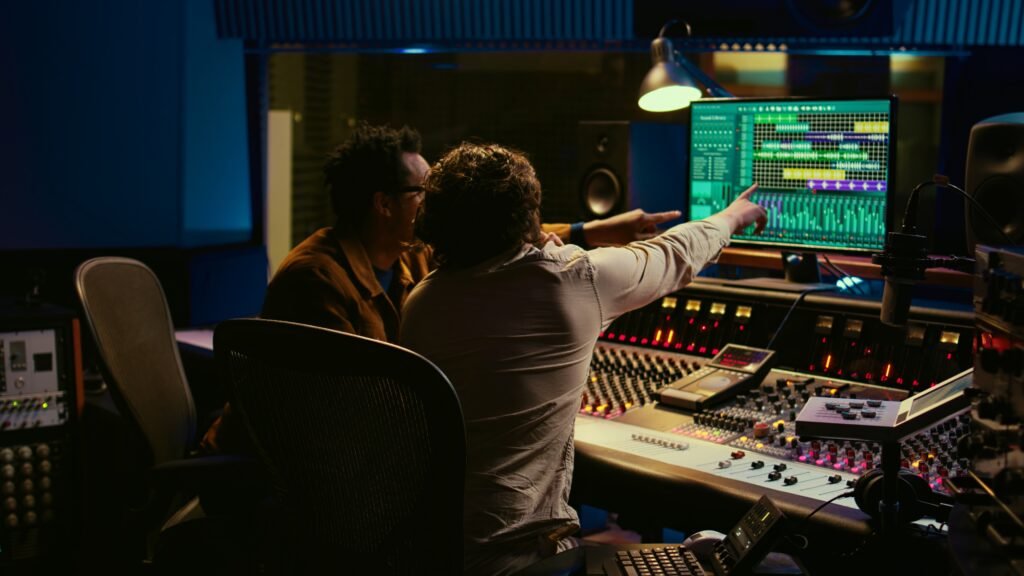
After recording, the editing phase begins. This involves removing mistakes, long pauses, mouth noises, repeated lines, and other imperfections. Even experienced narrators require multiple takes, and editing ensures the final version sounds smooth and natural.
Then comes proofing. A separate listener may follow along with the manuscript to ensure nothing was skipped or misread. This step prevents errors that can damage credibility.
Finally, mastering adjusts volume levels to meet platform requirements. Audiobook retailers have strict technical standards. If the audio doesn’t comply, it gets rejected.
The difference between DIY and professional production usually comes down to audio quality and efficiency. Some authors attempt to record at home, but without proper equipment and editing experience, the results can sound amateurish. And once something sounds unprofessional in audio format, listeners tend to stop quickly.
Understanding what’s included helps you evaluate pricing more realistically. You’re not just paying for someone to read. You’re paying for recording expertise, technical compliance, editing time, and distribution readiness.
How to Make an Audiobook: Step-by-Step Overview
If you’ve been wondering how to make an audiobook, the good news is that the process is structured and predictable. It’s not mysterious once you see the steps laid out clearly.
Here’s what typically happens.
Step 1: Prepare the manuscript for audio.
Your book isn’t always ready for narration as-is. Visual elements like charts, footnotes, or “see page 42” references don’t translate well. You may need minor adjustments so the content flows naturally when spoken.
Step 2: Decide who will narrate.
This decision affects everything else. If you plan to narrate yourself, you’ll need proper equipment and possibly coaching. If you’re hiring a professional narrator, auditions usually happen at this stage.
Step 3: Record the audio.
Recording is measured in “finished hours.” On average, one finished hour of audio takes about 2–3 hours to record. A 60,000-word book often becomes roughly 6–7 hours of finished audio.
Step 4: Editing and cleanup.
After recording, the raw audio is edited. This includes removing errors, smoothing transitions, and ensuring consistent sound levels. Editing can take several hours per finished hour of audio.
Step 5: Proofing and corrections.
Someone listens carefully while following the text to ensure nothing was skipped or mispronounced. Corrections are recorded and inserted.
Step 6: Mastering and formatting.
The final files must meet specific technical standards for platforms like Audible, Apple Books, or Spotify. This includes consistent volume levels and file formatting.
Step 7: Distribution.
Once approved, your audiobook is uploaded through distribution platforms or publishing partners.
When you see it broken down like this, the process feels more manageable. It’s detailed, yes. But it’s not complicated. Most of the work happens behind the scenes in editing and technical preparation. For first-time authors, the biggest surprise is how much time goes into post-production. Recording is just one piece of the puzzle.
Audiobook Narration Options: DIY vs Professional Voice Actor
Choosing the right voice is one of the most important decisions you’ll make. Audiobook narration isn’t just reading words correctly. It’s performance, pacing, and tone.
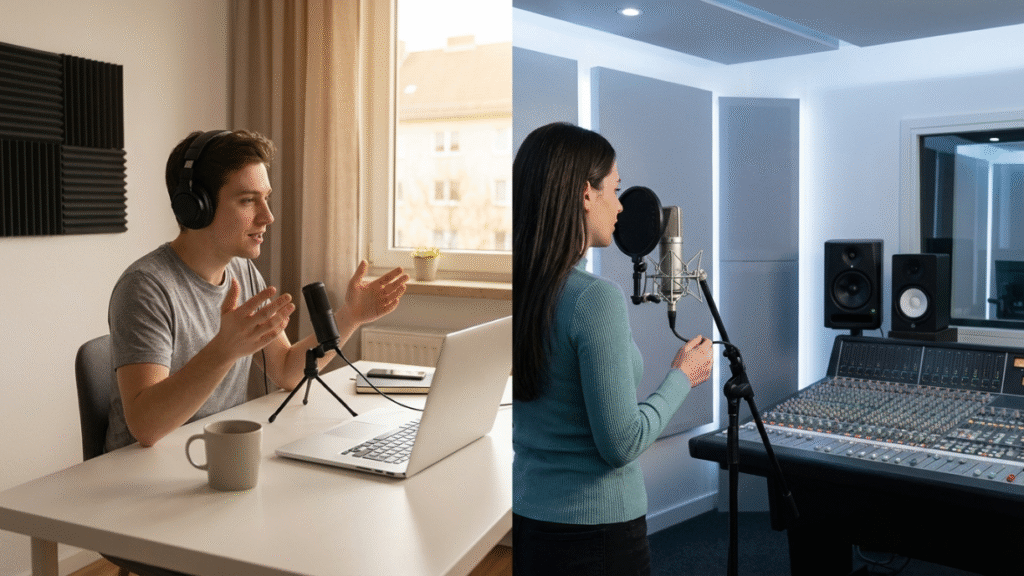
There are two main paths: narrate it yourself or hire a professional voice actor.
Option 1: Narrating Your Own Book
This can work well for certain genres. Memoirs, business books, self-help, and faith-based books often benefit from the author’s own voice. Listeners sometimes prefer hearing the story directly from the person who wrote it.
But self-narration comes with challenges:
- You need good recording equipment.
- You must control pacing and tone.
- You’ll likely need multiple takes.
- Editing can become time-consuming.
Many authors underestimate how physically demanding narration is. Speaking clearly for hours requires stamina.
Option 2: Hiring a Professional Narrator
Professional narrators bring experience. They understand pacing, emotional tone, and character distinction. For fiction especially, this matters. A skilled narrator can subtly shift voices for different characters without sounding exaggerated.
They also know how to maintain consistent energy from beginning to end. That consistency is harder than it sounds.
When choosing a narrator, consider:
- Genre compatibility
- Voice tone (warm, authoritative, youthful, calm)
- Accent and pronunciation
- Audience expectations
For example, a thriller may require intensity and tension, while a business book benefits from clarity and confidence.
There isn’t one correct choice. It depends on your book, your brand, and your budget. But the voice of your audiobook shapes the listener’s entire experience. That’s why this step deserves careful thought rather than a rushed decision.
What “Professional Narration” Actually Includes
When authors hear the phrase “professional narration,” they often assume it simply means hiring someone with a good voice. In reality, it involves much more than that.
Professional narration typically includes studio-grade recording equipment, sound-treated recording environments, controlled pacing, and multiple retakes. A trained narrator doesn’t just read the text. They interpret it.
For nonfiction, that means clarity, emphasis in the right places, and natural pacing that helps listeners absorb information. For fiction, it often includes subtle character differentiation. Not exaggerated accents or theatrical performance, but enough tonal variation that listeners can follow dialogue without confusion.
Breath control is another factor most authors don’t think about. Skilled narrators know how to manage breathing so it doesn’t become distracting. They also know how to maintain consistent volume levels throughout long recording sessions.
Professional narrators also prepare before recording. They review the manuscript, research pronunciations, and clarify unfamiliar terms. If your book includes technical language, foreign names, or industry-specific vocabulary, preparation becomes especially important.
Retakes are normal. Even experienced narrators re-record lines when something sounds off. What you hear in a finished audiobook is usually the result of multiple takes combined into one smooth performance.
There’s also collaboration involved. If you’re working with a production team, you may receive short samples for approval before full recording begins. This allows adjustments to tone or pacing early on rather than after everything is completed.
Many authors initially focus only on cost, but understanding what goes into narration helps explain pricing differences. You’re not just paying for time spent reading. You’re paying for skill, preparation, technical equipment, and post-production integration.
In short, professional narration is less about having a “nice voice” and more about delivering a consistent, engaging listening experience that keeps someone tuned in for hours.
How Much Do Audiobooks Cost?
Cost is usually the first concern for first-time authors. And understandably so. Audiobooks can be a meaningful investment.
Pricing is commonly calculated per “finished hour” (PFH). This means you’re paying based on the final length of the audiobook, not the total hours spent recording or editing.
For example, if your book becomes a 7-hour audiobook, and the rate is $200 per finished hour, total narration cost would be around $1,400. Rates can vary widely depending on narrator experience and production quality.
Here’s what typically affects pricing:
- Narrator experience
- Studio quality
- Editing and mastering complexity
- Length of the manuscript
- Genre demands
There are generally two pricing models:
1. Flat fee model
You pay upfront for full production. This gives you full control and higher royalty percentages on most platforms.
2. Royalty share model
Instead of paying upfront, you split royalties with the narrator for a set period. This lowers immediate cost but reduces long-term earnings.
When evaluating audiobook production services, it’s important to understand what’s included. Some packages cover narration only, while others include editing, mastering, distribution setup, and metadata optimization.
A 50,000–70,000 word book often costs somewhere between $1,000 and $3,000 depending on quality level and production approach. Lower-cost options exist, but audio quality tends to reflect the investment.
It’s also worth considering your overall publishing budget. Audiobooks work best when they’re part of a broader strategy, not an isolated expense.
The key isn’t finding the cheapest option. It’s understanding what level of production aligns with your goals, audience expectations, and long-term plan.
How Long Does It Take to Produce an Audiobook?
One of the most common questions authors ask is about timing. How long does this actually take? The short answer: longer than most expect, but not unreasonably long.
Production time depends largely on book length. A helpful guideline is this: for every one finished hour of audio, expect 4–6 total production hours when you include recording, editing, proofing, and mastering.
Let’s use an example. If your book becomes a 7-hour audiobook:
- Recording alone might take 14–20 hours.
- Editing and cleanup can take another 20–30 hours.
- Proofing and corrections may add several more hours.
That doesn’t mean it takes weeks of nonstop work. But it does mean the process involves multiple stages.
In practical terms, most audiobooks take 3 to 6 weeks to complete once recording begins. Larger books or complex fiction may take longer. Delays often happen during:
- Narrator scheduling
- Revision rounds
- Platform approval processes

If you’re self-narrating, timelines can stretch further because you’re balancing recording with other responsibilities. Recording sessions can be physically tiring, so most narrators limit daily sessions to protect vocal quality.
Another factor authors overlook is platform approval. Once your files are submitted, distributors like Audible may take several days or weeks to review and approve them. If something doesn’t meet technical standards, revisions may be required.
This is why planning matters. If you’re coordinating an audiobook release with a paperback or ebook launch, production should begin well in advance.
For first-time authors, it helps to think of audiobook creation as a mini-project within your larger publishing timeline. It’s not instant, but it’s manageable when scheduled properly.
Do Audiobooks Actually Sell? What Performs Best?
This is the honest question most authors are thinking about: do audiobooks really sell, or is this just another publishing trend?
The answer depends heavily on genre, audience behavior, and how well your book already performs in other formats.
For many audiobook for self-published authors, sales tend to mirror existing momentum. If your ebook or paperback already has steady traffic, the audiobook often benefits from that same audience. If the book is struggling to sell in any format, the audiobook usually doesn’t magically change that.
That said, some genres perform especially well in audio:
- Memoirs and personal stories
- Business and leadership books
- Self-help and motivational nonfiction
- Thrillers and suspense fiction
- Romance
Why? Because these genres translate naturally into spoken storytelling. Listeners often consume them during commuting, workouts, or daily routines.
Nonfiction works particularly well when the content feels conversational. If your book already reads like you’re speaking directly to the reader, it tends to adapt smoothly to audio.
On the other hand, highly visual books, workbooks, heavily illustrated content, or technical manuals don’t perform as strongly in audio format.
Another factor is audience preference. Some readers simply prefer listening. If your target audience includes busy professionals, parents, or commuters, audio may make sense.
However, first-time authors should approach expectations realistically. Audiobooks typically represent an additional revenue stream, not necessarily the primary one. For many authors, they account for 10–30% of total book revenue.
The value isn’t only direct sales. Audiobooks also increase accessibility. Some readers discover new authors exclusively through audio platforms.
The key takeaway is this: audiobooks tend to perform best when they expand an already functioning book ecosystem rather than attempting to rescue a slow-moving title.
When Is an Audiobook Worth It?
By this point, you might be thinking, “This sounds good, but is it worth it for me right now?”
That’s a fair question. An audiobook isn’t automatically the next step for every author. Timing matters. An audiobook is usually worth considering when:
- Your ebook or paperback is already selling consistently
- You’ve built some audience trust
- Your readers frequently consume audio content
- You have room in your publishing budget
For first-time authors, the biggest mistake is assuming audio should happen immediately after print. Sometimes it makes more sense to publish, gather feedback, build momentum, and then expand into audio once you understand your audience better.
If you’ve written a memoir, faith-based book, business guide, or self-development title, audio can be especially powerful. These genres often feel more personal when heard aloud. In those cases, audiobook production becomes less of an experiment and more of a strategic expansion.
It’s also worth considering your long-term goals. If you’re positioning yourself as a speaker, coach, or consultant, having an audiobook adds credibility. It shows you’re building a full publishing ecosystem rather than relying on one format.
On the other hand, if your book is highly visual or workbook-based, audio may not provide strong return right away.
Another factor is budget comfort. Audiobooks should feel like a calculated investment, not financial pressure. If producing one would strain your publishing resources, it may be wiser to focus on marketing your current formats first.
In simple terms, audiobooks work best as a multiplier, not a rescue strategy. They expand reach. They don’t usually fix a weak launch. Being honest about where you are in your publishing journey helps you decide whether this step makes sense now, or a few months down the road.
Common Mistakes First-Time Authors Make
Most audiobook problems don’t come from bad intentions. They come from rushing or misunderstanding the process. Here are the most common mistakes first-time authors make.
1. Prioritizing low cost over audio quality
Listeners are far less forgiving with audio than with print. Poor sound quality, echo, background noise, or inconsistent volume can lead to quick negative reviews. Once credibility is damaged in audio, it’s difficult to recover.
2. Choosing the wrong narrator
Sometimes authors pick a voice that sounds pleasant but doesn’t match the tone of the book. A thriller narrated in a relaxed, slow style won’t create tension. A business book narrated too theatrically can feel distracting.
Careful selection matters more than speed.
3. Rushing production timelines
Trying to align audio release with a tight book launch deadline can lead to skipped quality checks. Audiobook narration requires patience. Editing and proofing take time.
4. Ignoring technical standards
Platforms have strict audio requirements. If files don’t meet them, submissions are rejected. This creates delays and sometimes additional costs.
5. Expecting instant high sales
Audiobooks rarely explode overnight for new authors. They tend to build gradually, especially when supported by existing readers.
Another overlooked issue is failing to integrate audio into a broader marketing plan. Simply uploading the file isn’t enough. You need to mention it in emails, on social media, and on your author website.
Many of these mistakes can be avoided by working with experienced teams who understand the process end to end. But even if you’re exploring independently, being aware of these common pitfalls helps you make steadier decisions.
Conclusion: Should You Invest in an Audiobook?
By now, you’ve seen what goes into producing an audiobook. It’s not just someone reading your manuscript into a microphone. It’s preparation, narration, editing, mastering, distribution, and strategic planning.
If your book is already gaining traction and your audience prefers listening over reading, an audiobook can be a natural extension. It expands accessibility, gives busy readers another way to engage with your work, and strengthens your credibility if you’re building a speaking or consulting platform.
If you’re still early in your publishing journey and testing your market, it may be smarter to focus first on growing your readership. Audio tends to work best when it builds on something that’s already moving.
What matters most is clarity. Instead of feeling pressured by trends, think about your readers. Do they listen to podcasts? Do they consume audio content during commutes or workouts? Have they asked for an audiobook version?
When approached strategically, audiobook production becomes part of a larger publishing ecosystem rather than an isolated expense.
For authors who want structured guidance, working with experienced audiobook teams can simplify the process. At Virtue Publishing, we help authors navigate narration selection, technical standards, editing, and distribution without making it overwhelming. The goal isn’t to push audio on every author. It’s to help you decide when it makes sense and execute it professionally when you’re ready.
An audiobook is not mandatory. But when timed well, it can be a strong addition to your overall publishing plan.
We Thought You Might Also Ask!
1. How long should my audiobook be?
Most nonfiction and fiction books between 50,000 and 70,000 words result in 5 to 8 hours of finished audio. There isn’t a perfect length, but anything under 3 hours may feel short unless it’s intentionally concise.
2. Can I narrate my own audiobook?
Yes. Many authors do. It works especially well for memoirs, personal development books, and faith-based titles. Just make sure audio quality meets professional standards and you’re prepared for multiple recording sessions.
3. How much do audiobook narrators charge?
Narrators typically charge per finished hour. Rates vary widely based on experience, but many fall between $150 and $400 per finished hour. Royalty share models are also available in some cases.
4. Where are audiobooks distributed?
Common platforms include Audible, Amazon, Apple Books, and Spotify. Distribution can be handled directly through platforms or through production partners who manage submission and formatting.
5. Do audiobooks help sell more print books?
Sometimes. Audiobooks increase exposure and accessibility. While they don’t guarantee higher print sales, they expand your reach to listeners who may not buy ebooks or paperbacks.
6. Is an audiobook a good idea for self-published authors?
An audiobook for self-published authors can be a strong addition when there is an existing audience or clear demand. It works best as an expansion strategy rather than a first step before testing your book in other formats.